

from restrictive oem
to high-flow system
Engineering-led design and fabrication focused on flow efficiency, integration and real-world performance.
A complete redesign of a restrictive OEM exhaust system, focusing on flow efficiency, packaging constraints and high-quality TIG fabrication.
the problem
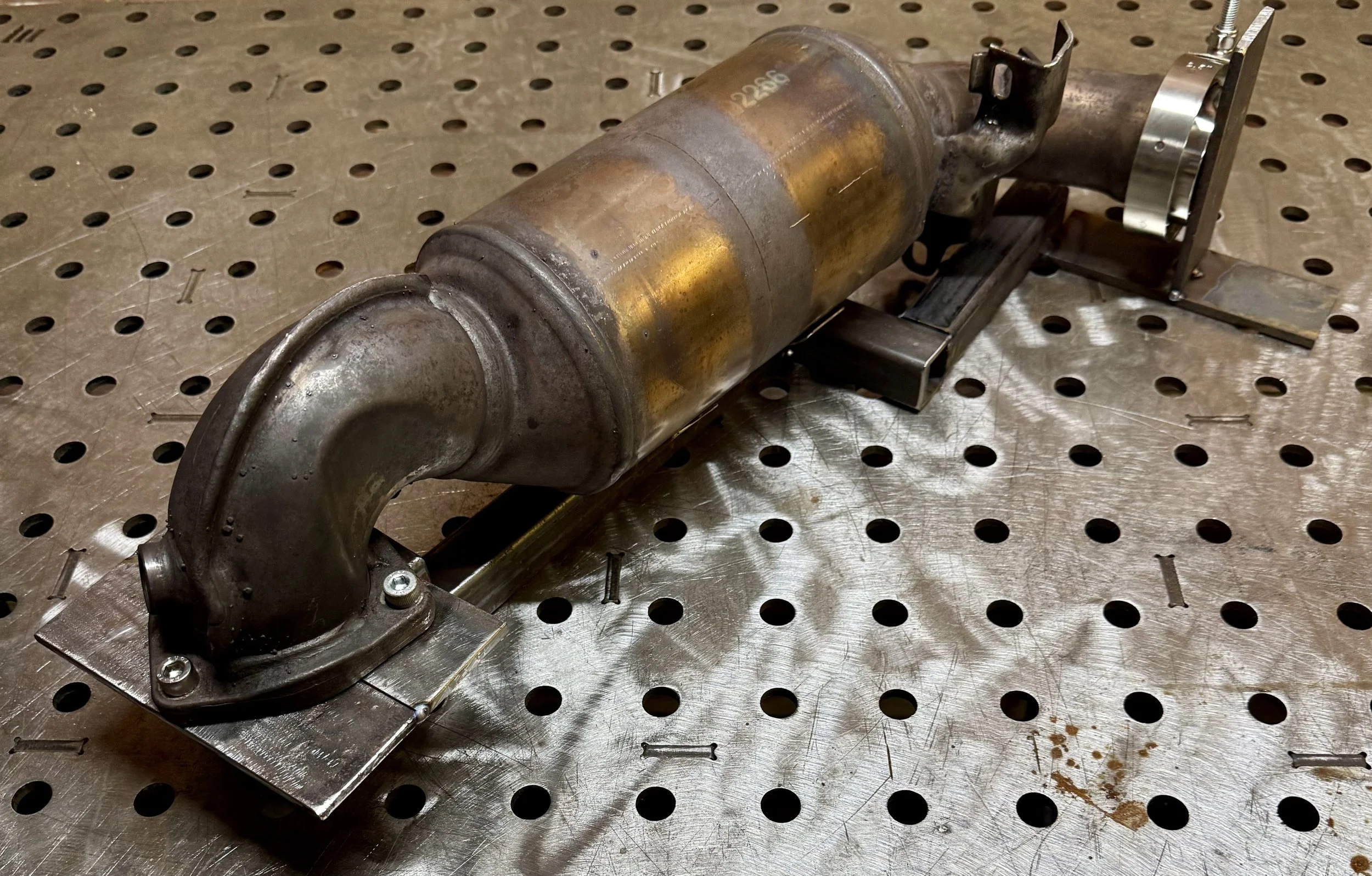
The OEM exhaust system was fundamentally restrictive, limiting the engine’s ability to efficiently expel exhaust gases.
Short-radius bends, poor flow transitions, and an inefficient catalyst design created unnecessary backpressure directly after the turbo. This reduced turbine efficiency, increased heat retention, and restricted overall engine performance.
Rather than supporting the engine’s potential, the system acted as a bottleneck — requiring a complete redesign focused on flow efficiency, smoother geometry, and improved gas velocity management.
Comparison
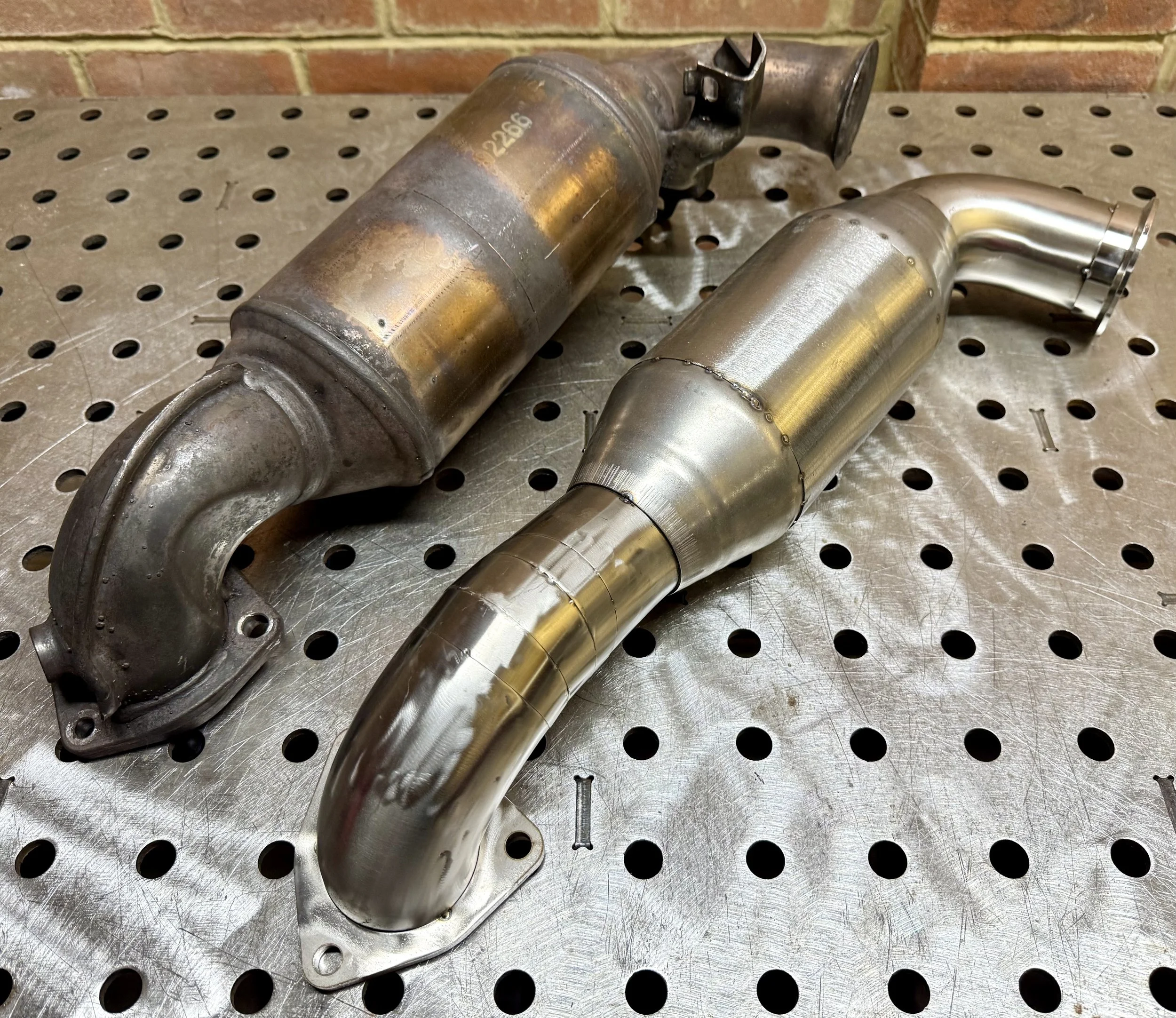
A direct comparison between the OEM system (left) and the redesigned high-flow assembly (right) highlights the key improvements in both geometry and flow efficiency.
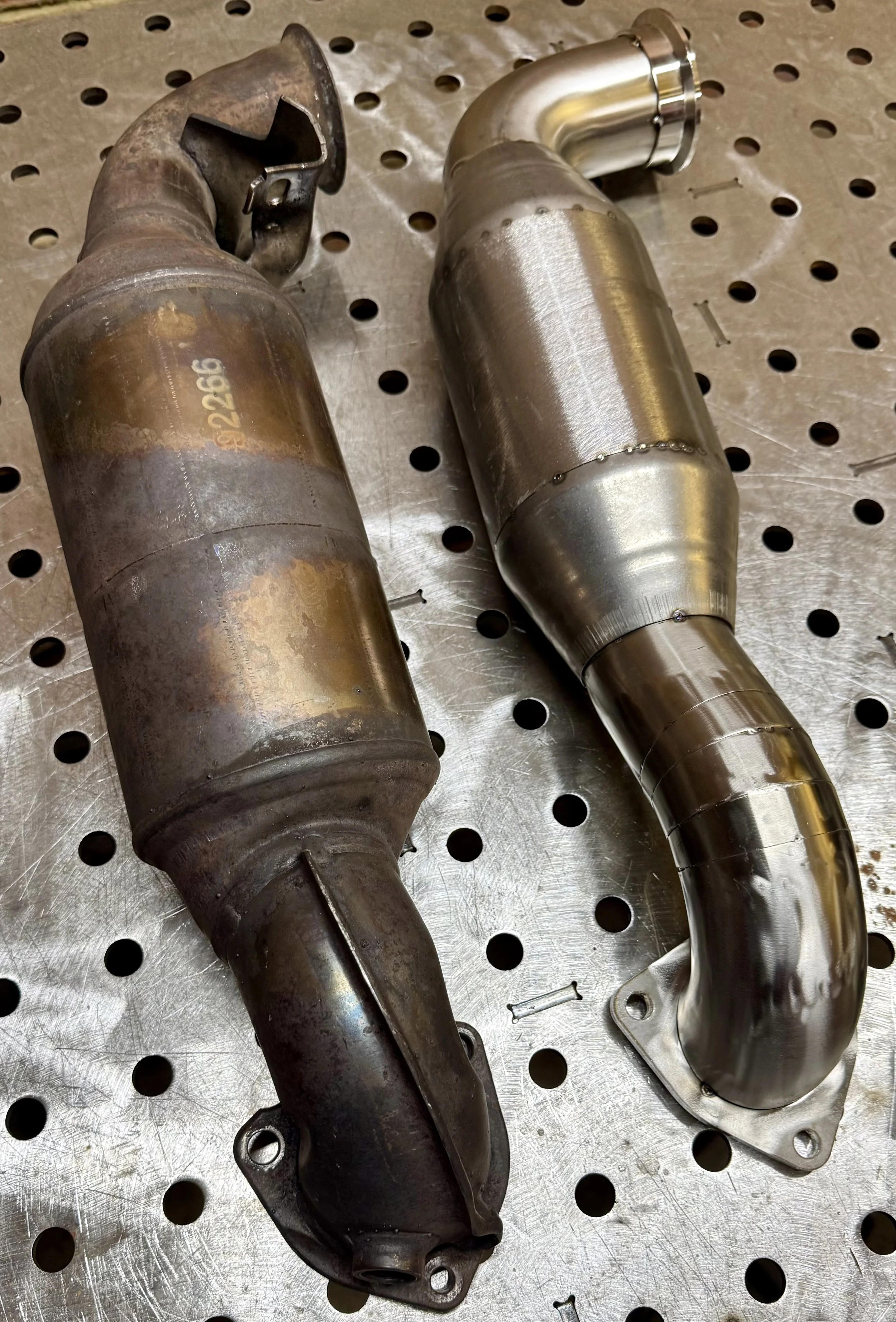
The original unit relies on tight-radius bends and abrupt internal transitions, creating unnecessary restriction immediately after the turbine. The catalyst design is bulky and inefficient, further limiting flow capacity.
In contrast, the redesigned system features:
Increased bend radius to reduce turbulence and backpressure
Controlled transitions to maintain exhaust gas velocity
A high-flow 200cpsi Euro 6 catalyst for improved emissions compliance without compromising performance
V-band connection for modularity, precise alignment, and leak-free assembly
Precision-fabricated sections ensuring consistent internal diameter throughout
The result is a significantly more efficient exhaust path, improving turbine efficiency, reducing thermal stress, and allowing the engine to operate closer to its true performance potential.
solution / process
The redesigned system was developed with a focus on flow efficiency, thermal management, and precise integration within the vehicle’s packaging constraints.
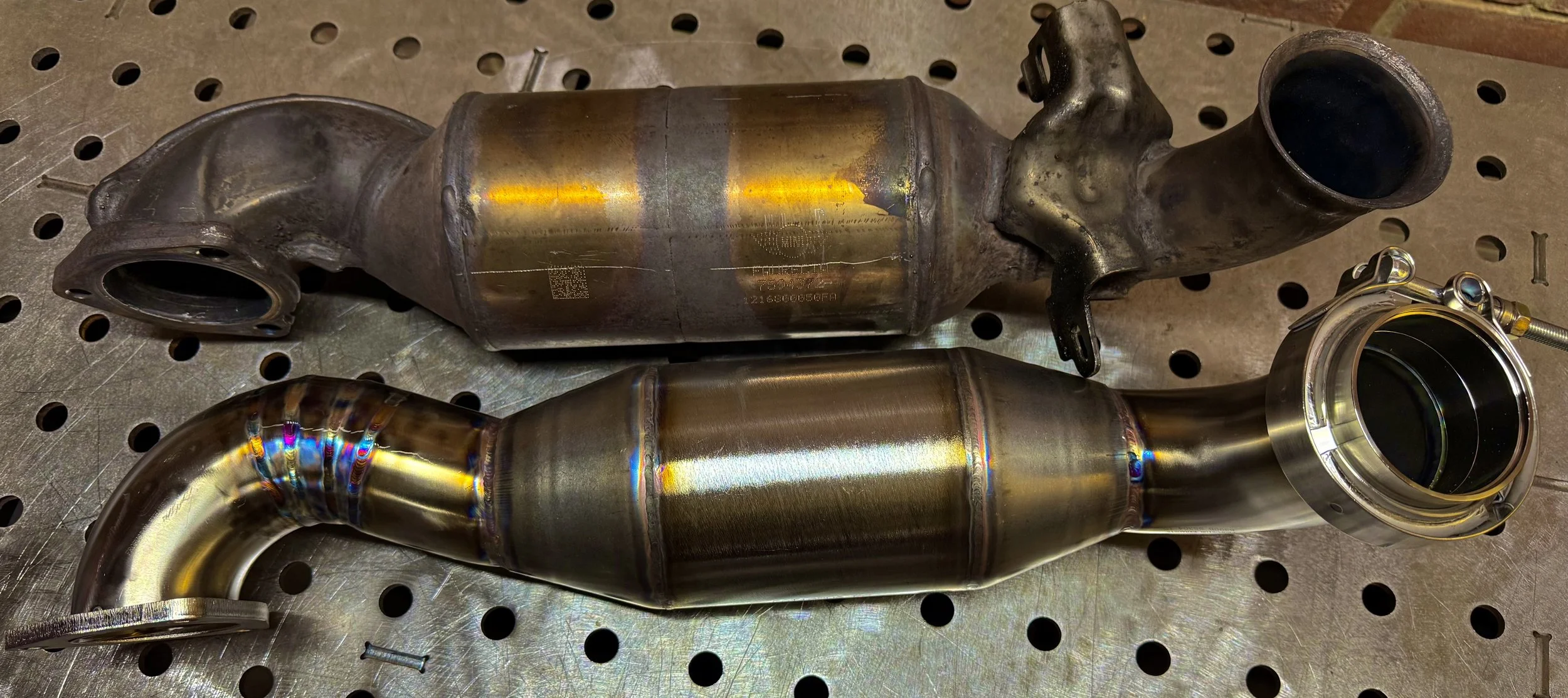
A smoother, more controlled flow path was achieved through the use of larger-radius bends and consistent internal diameters, reducing turbulence and maintaining exhaust gas velocity throughout the system. Transition sections were carefully formed to eliminate abrupt changes in cross-sectional area, ensuring stable flow characteristics under load.
A high-flow 200cpsi Euro 6 catalyst was integrated to balance performance with emissions compliance while maintaining minimal restriction. Oxygen sensor positions were retained and accurately replicated to preserve correct ECU feedback and avoid calibration issues.
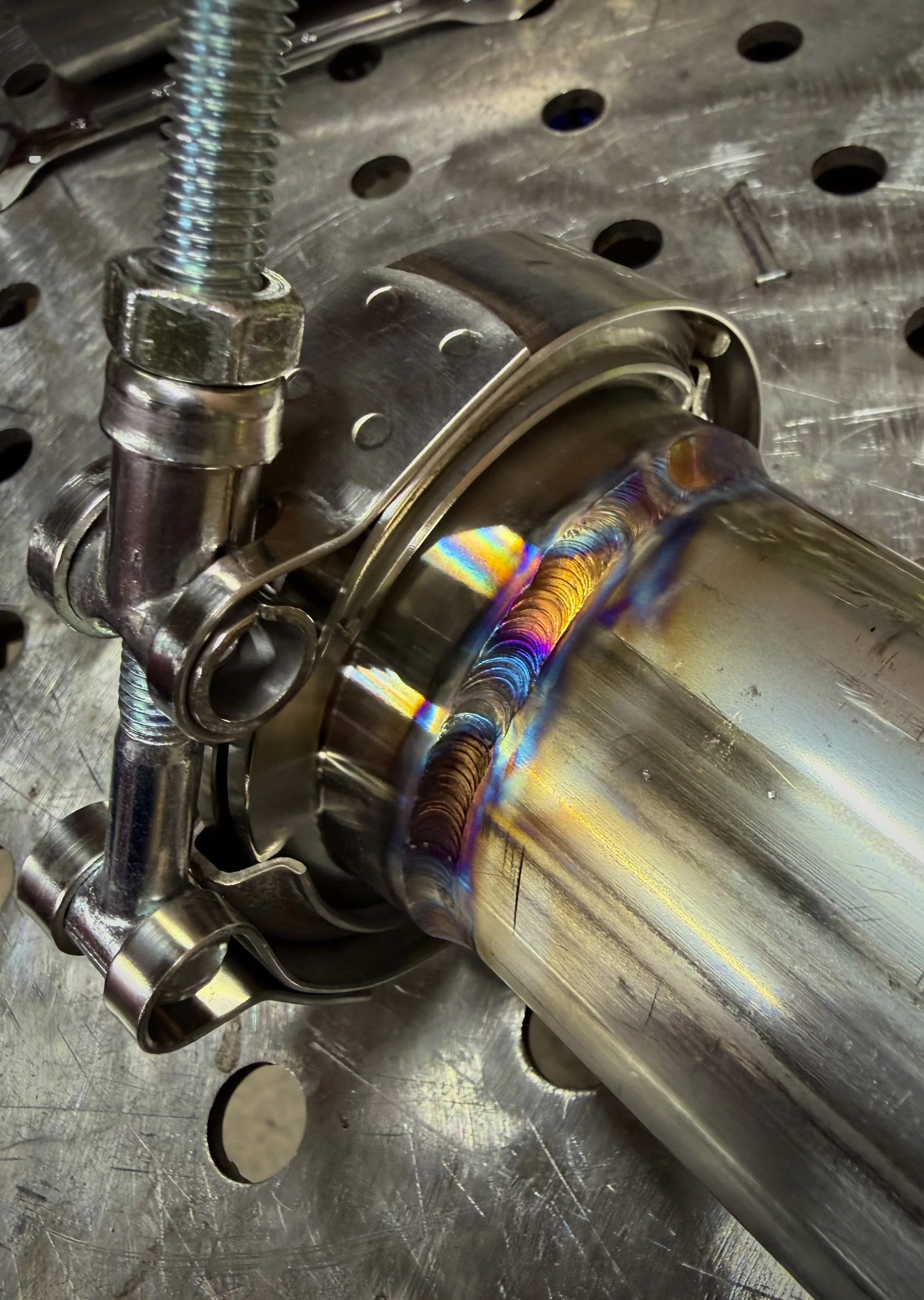
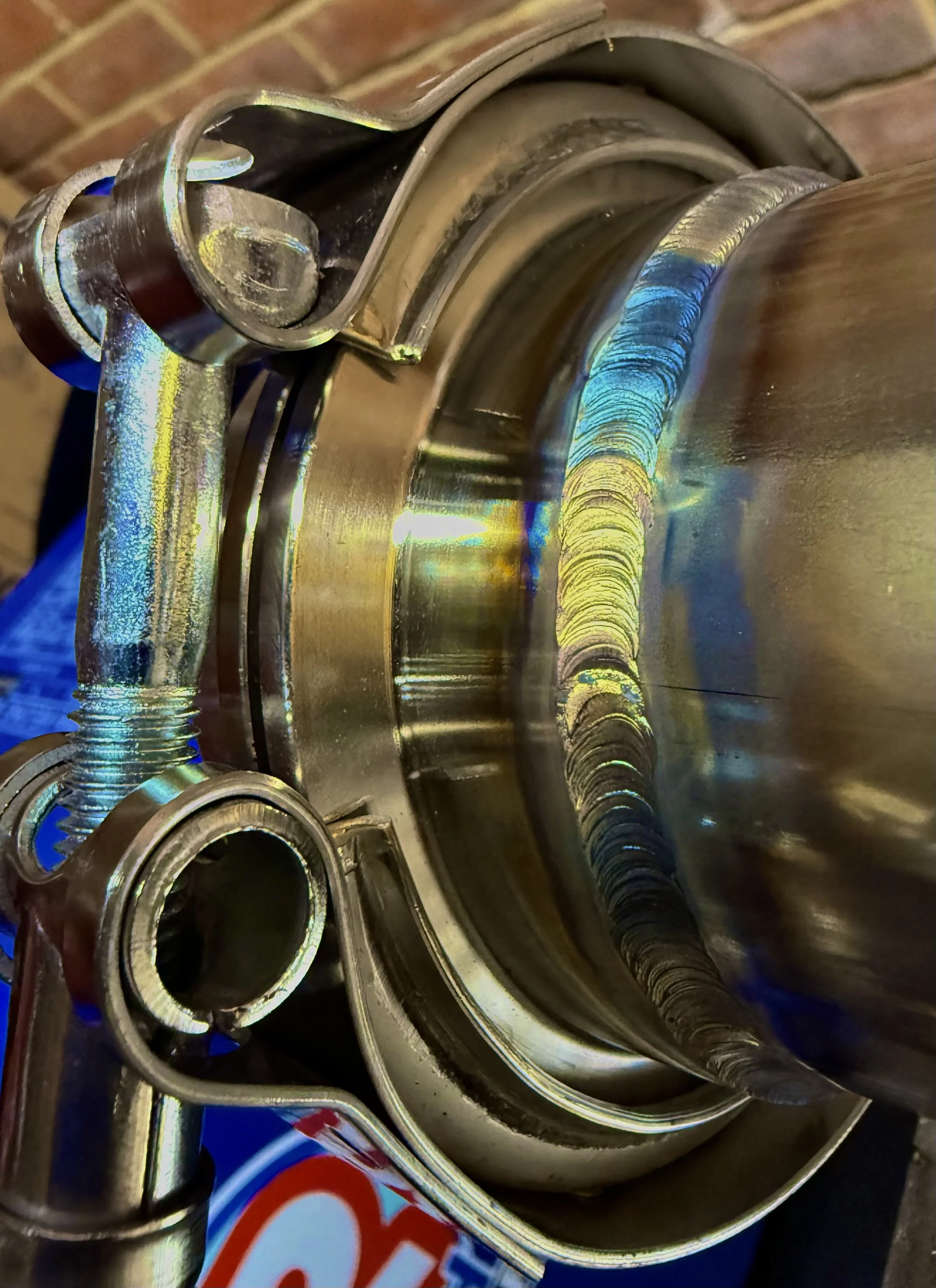
V-band connections were incorporated throughout the system to allow for precise alignment, modular assembly, and reliable, leak-free sealing.
All components were TIG welded with full purge control to ensure clean internal welds, structural integrity, and long-term durability under thermal cycling.
The result is a system engineered not only for performance gains, but for consistency, serviceability, and repeatable manufacturing.
full system integration
Beyond the downpipe, the system was developed as a complete exhaust solution, ensuring consistent flow characteristics and integration throughout the entire assembly.
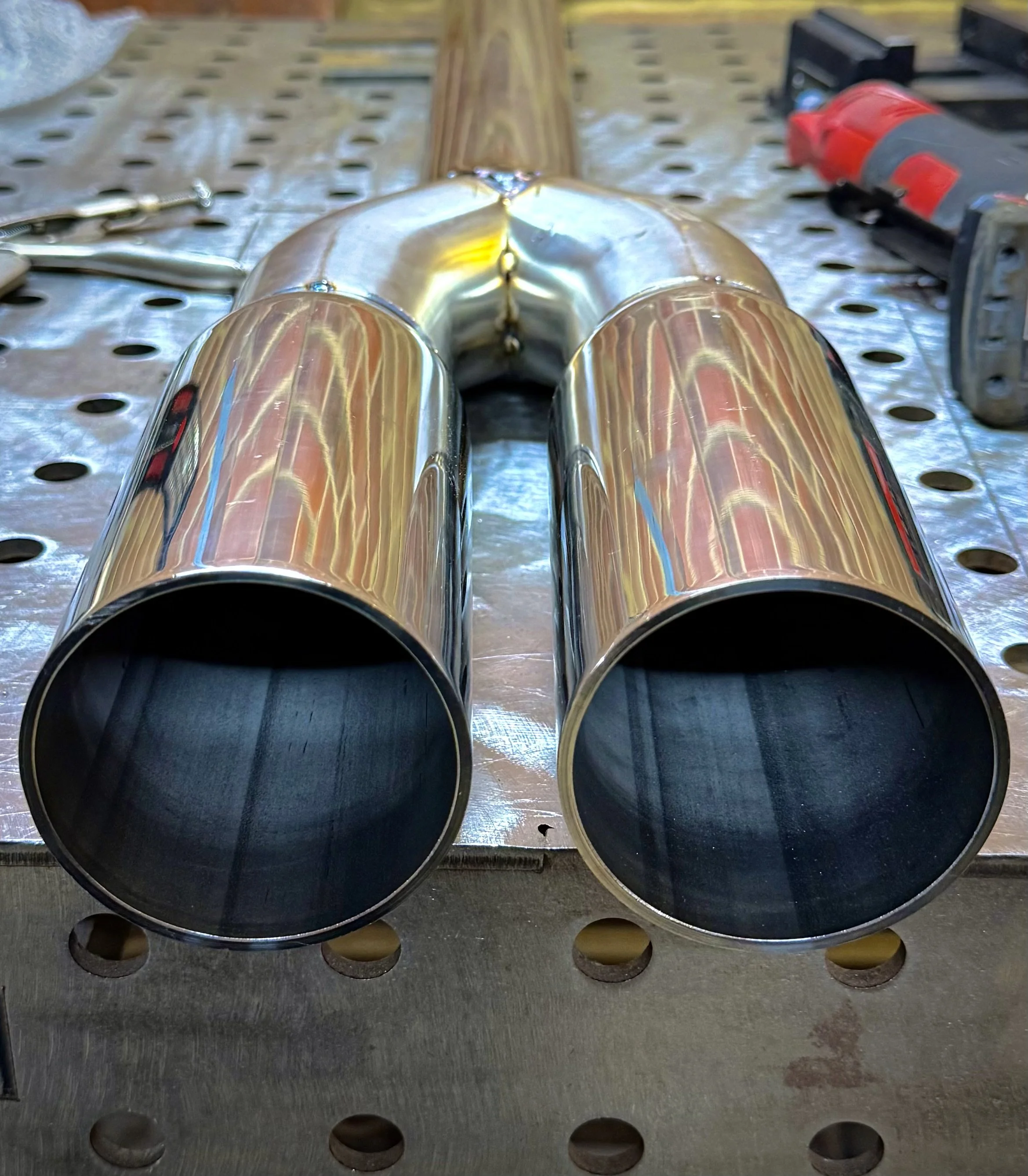
The midpipe and rear sections were designed to maintain exhaust gas velocity while providing effective acoustic control. A straight-through resonator was incorporated to reduce unwanted drone without introducing significant restriction, while downstream geometry was kept consistent to support smooth flow and balanced performance.
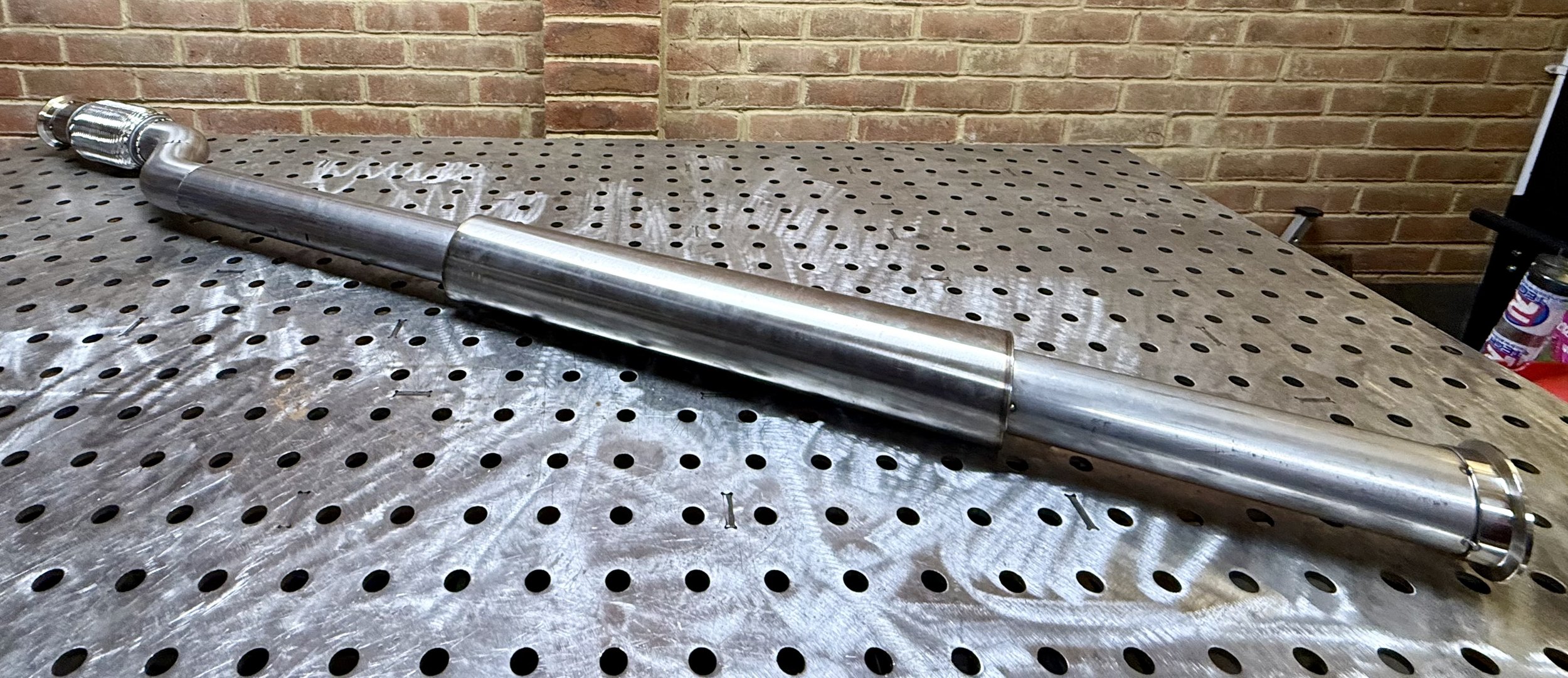
Modular construction was retained throughout using V-band connections, allowing for accurate alignment, ease of installation, and future serviceability.
The result is a cohesive system that not only improves performance at the source, but maintains those gains across the full exhaust path while delivering a refined and controlled exhaust note.
results / outcome
The completed system delivers a significant improvement in overall exhaust flow efficiency, allowing the engine to operate freely, with a measurable reduction in backpressure and improved thermal management directly from the turbine outlet.
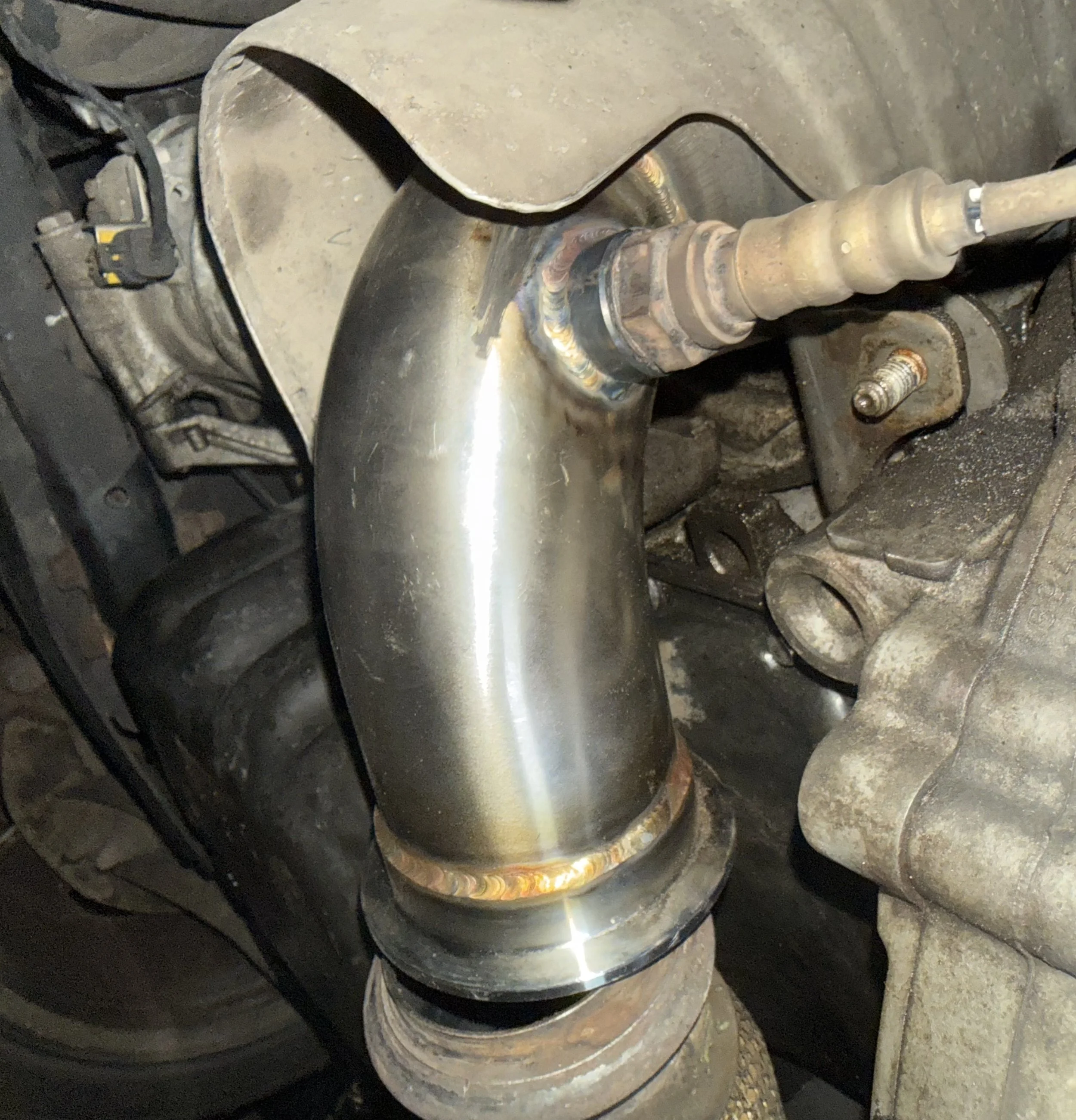
By addressing the key restrictions present in the original design, the system enables more efficient exhaust gas evacuation, supporting improved engine response and more consistent performance under load.
Integration within the vehicle was achieved without compromise, with precise fitment, correct sensor positioning, and stable clearances maintained throughout. The use of modular V-band connections further ensures ease of installation, serviceability, and long-term reliability.
Beyond performance, the system delivers a more refined and controlled exhaust note, balancing increased character with reduced unwanted resonance during normal driving conditions.
This project demonstrates a complete approach to exhaust system design and fabrication — combining engineering-led design decisions with high-quality execution to produce a reliable, repeatable, and performance-focused result.
For similar projects or custom exhaust system development, please get in touch.