

WELLS VERTIGE MANIFOLD DEVELOPMENT
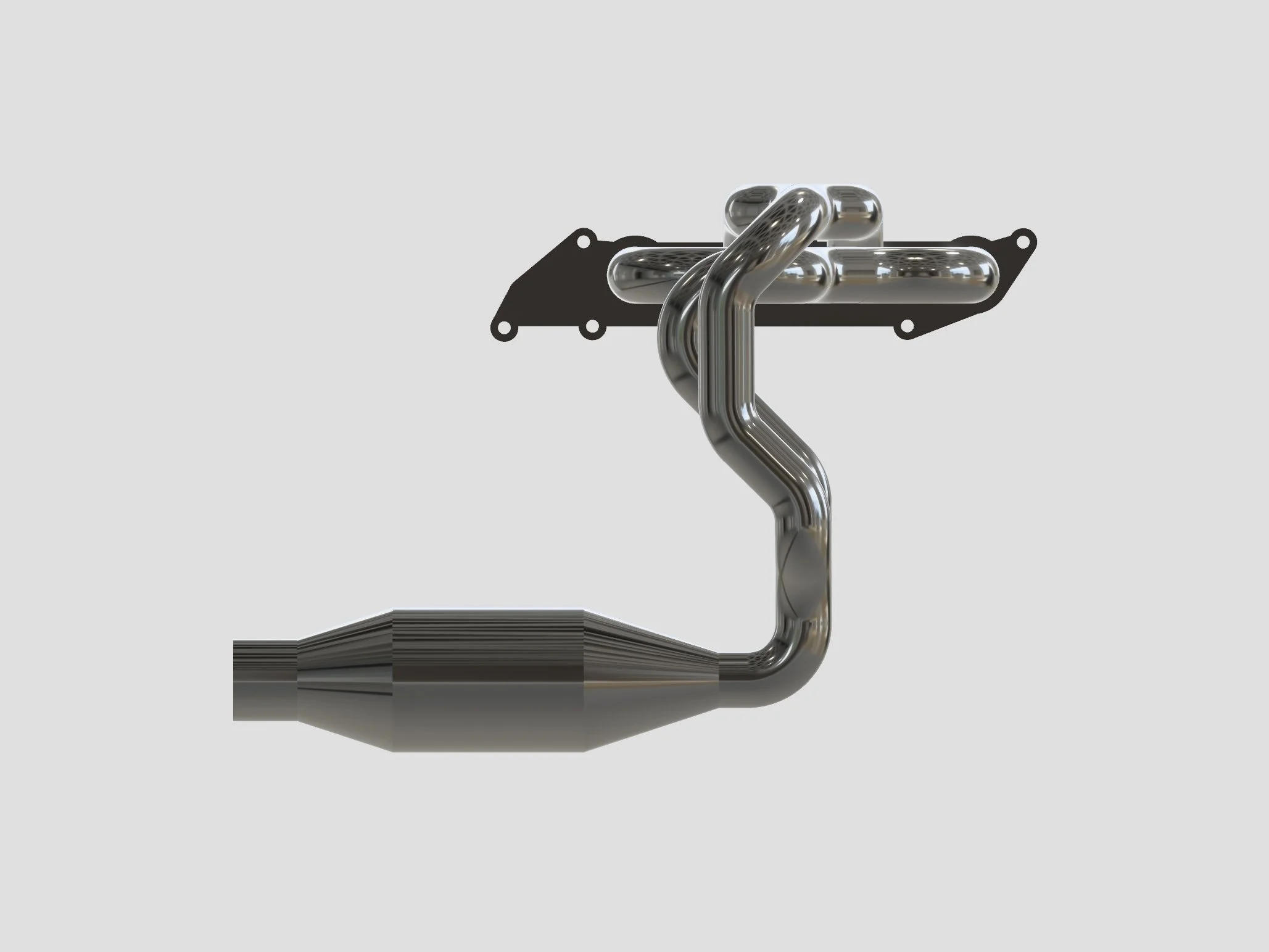
Leading the design and early-stage development of the complete exhaust system architecture.
From prototype through to production-focused refinement, defining manifold geometry, flow strategy and system integration for performance, packaging and repeatable manufacture.
This work represents an ongoing development programme, with concepts evolving through analysis, design iteration and prototyping.
Development approach
The original system presented limitations in primary length, geometry and overall flow efficiency.
Development is centred around a true equal-length manifold strategy, improving exhaust pulse timing and scavenging behaviour.
Routing is optimised within tight mid-engine packaging constraints, balancing length accuracy with manufacturability and serviceability.
Collector design is approached with a focus on smooth merge transitions and controlled angles to maintain gas velocity and reduce turbulence.
Acoustic and thermal behaviour are considered throughout, ensuring each configuration delivers a distinct and usable character.
system variants
Development is structured around clearly defined performance, acoustic and packaging objectives.
Multiple system architectures are evaluated to achieve specific characteristics, rather than a one-size-fits-all solution.
4-2-1 architecture — prioritised for mid-range torque delivery and refined acoustic character
4-1 architecture — evaluated for peak power and a more aggressive response profile
Executive configuration — focused on acoustic control and usability without compromising flow efficiency
Performance-focused configuration — reduced restriction and optimised system response for maximum output.
performance development
Primary and secondary lengths are informed by wave tuning analysis, targeting specific harmonic ranges to influence torque characteristics.
This allows development to be guided by predicted performance behaviour, rather than trial and error.
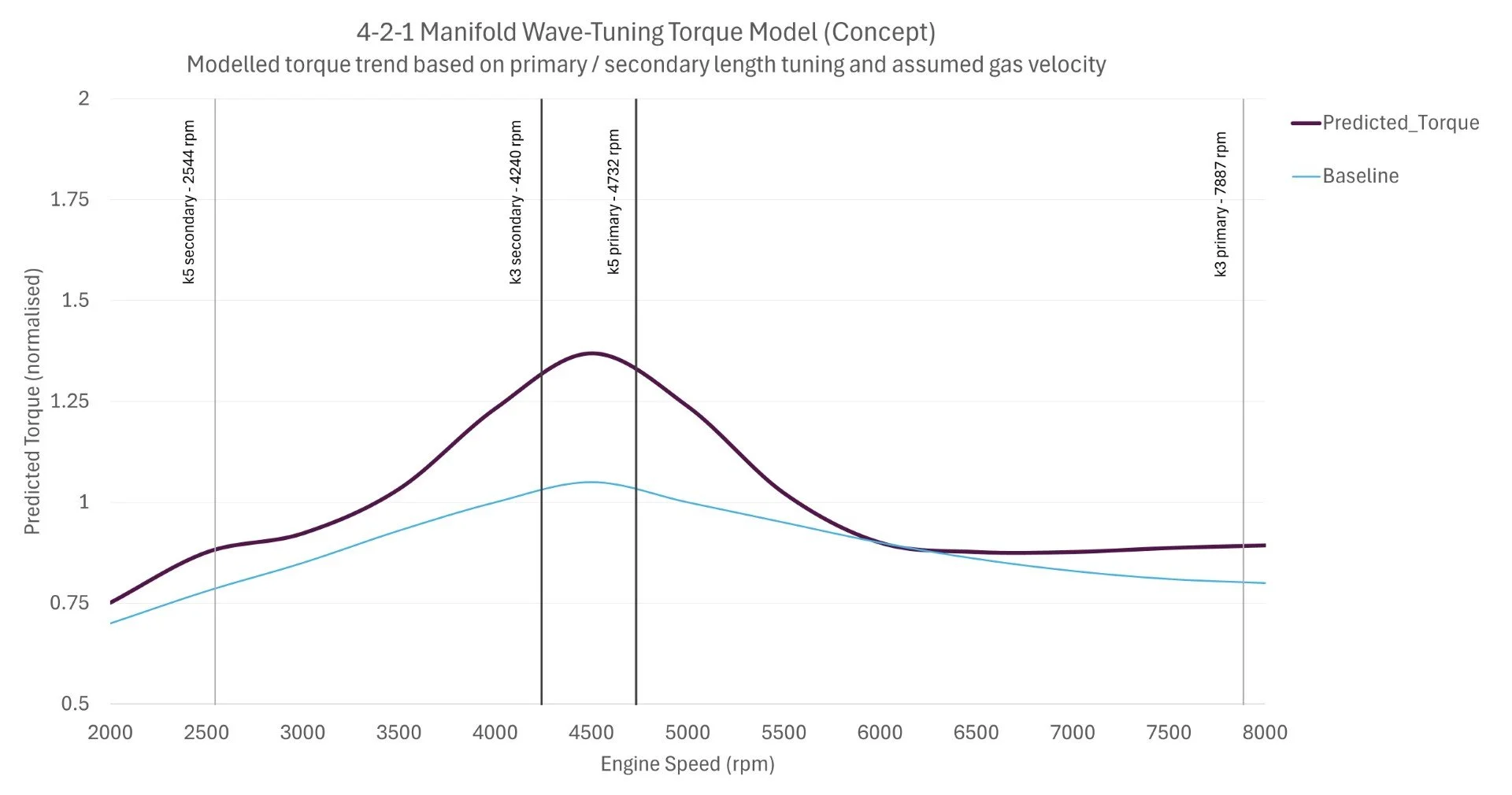
Conceptual torque modelling is used to compare configurations and support design direction.
concept development
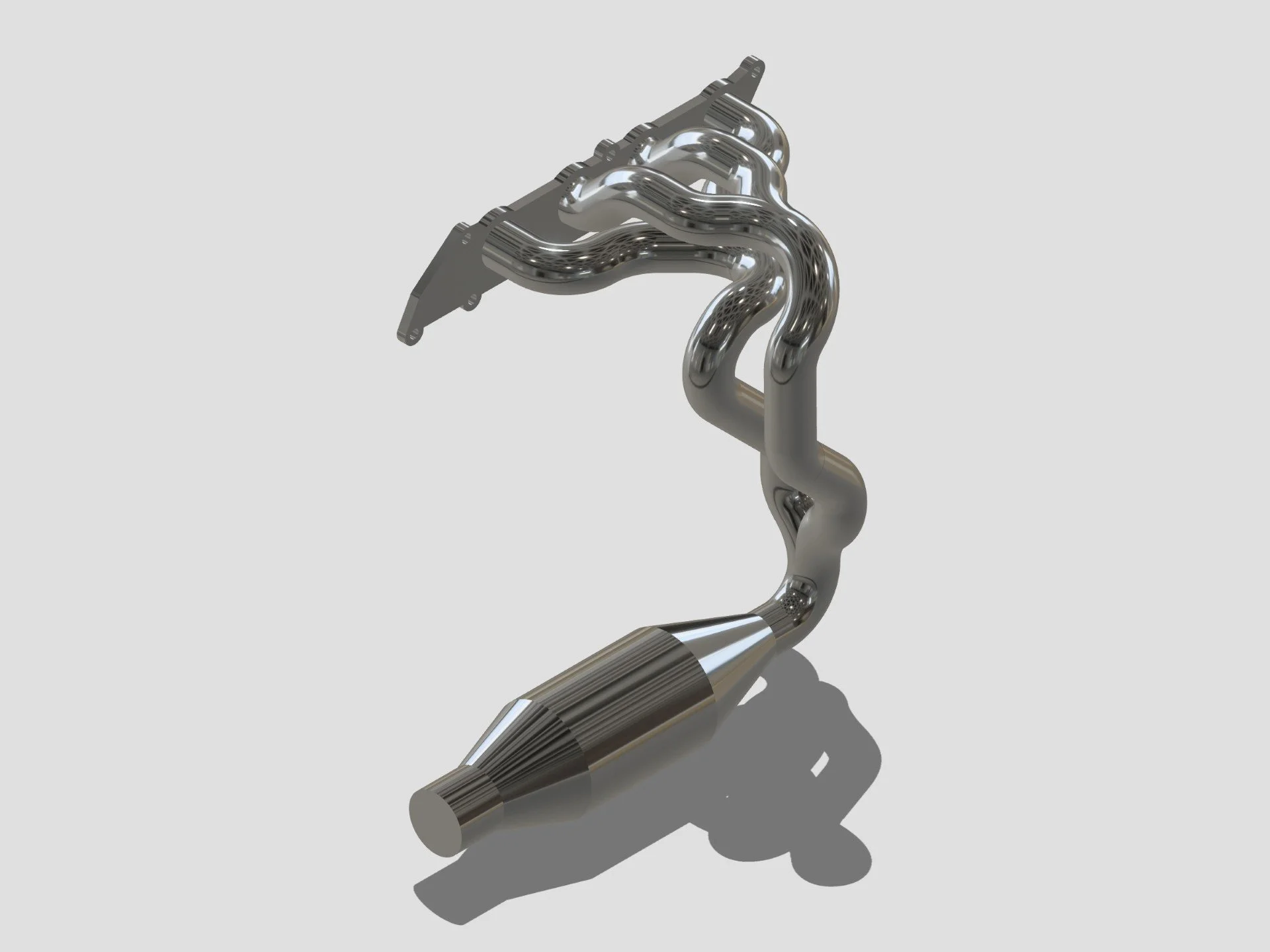
Early-stage CAD studies are used to explore routing strategies and equal-length solutions within the available packaging envelope.
These concepts prioritise:
consistent primary and secondary lengths
smooth routing with minimal compromise
integration within chassis and subframe constraints
Development is ongoing, with current concepts being refined toward a finalised equal-length solution featuring extended primary and secondary lengths, optimised collector geometry and improved overall integration.
outcome
The final systems will represent a balance of performance, manufacturability and visual quality, suitable for low-volume production.
Ongoing development updates and prototype systems available on request.